
Ahmad Ibrahim
I design data-heavy product interfaces, and build them.
I design dashboards and internal tools for technical teams, then build them as working front ends.
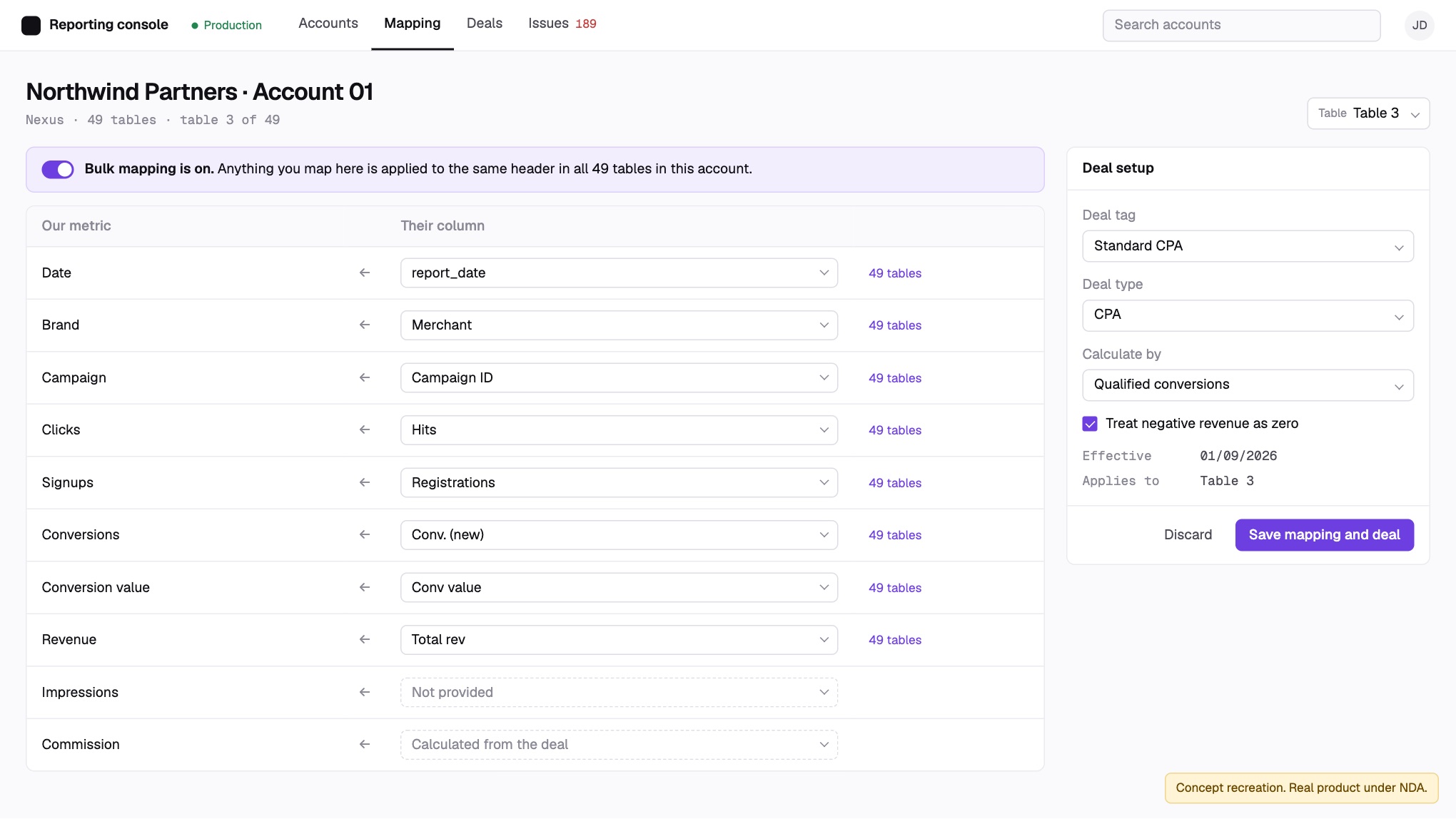
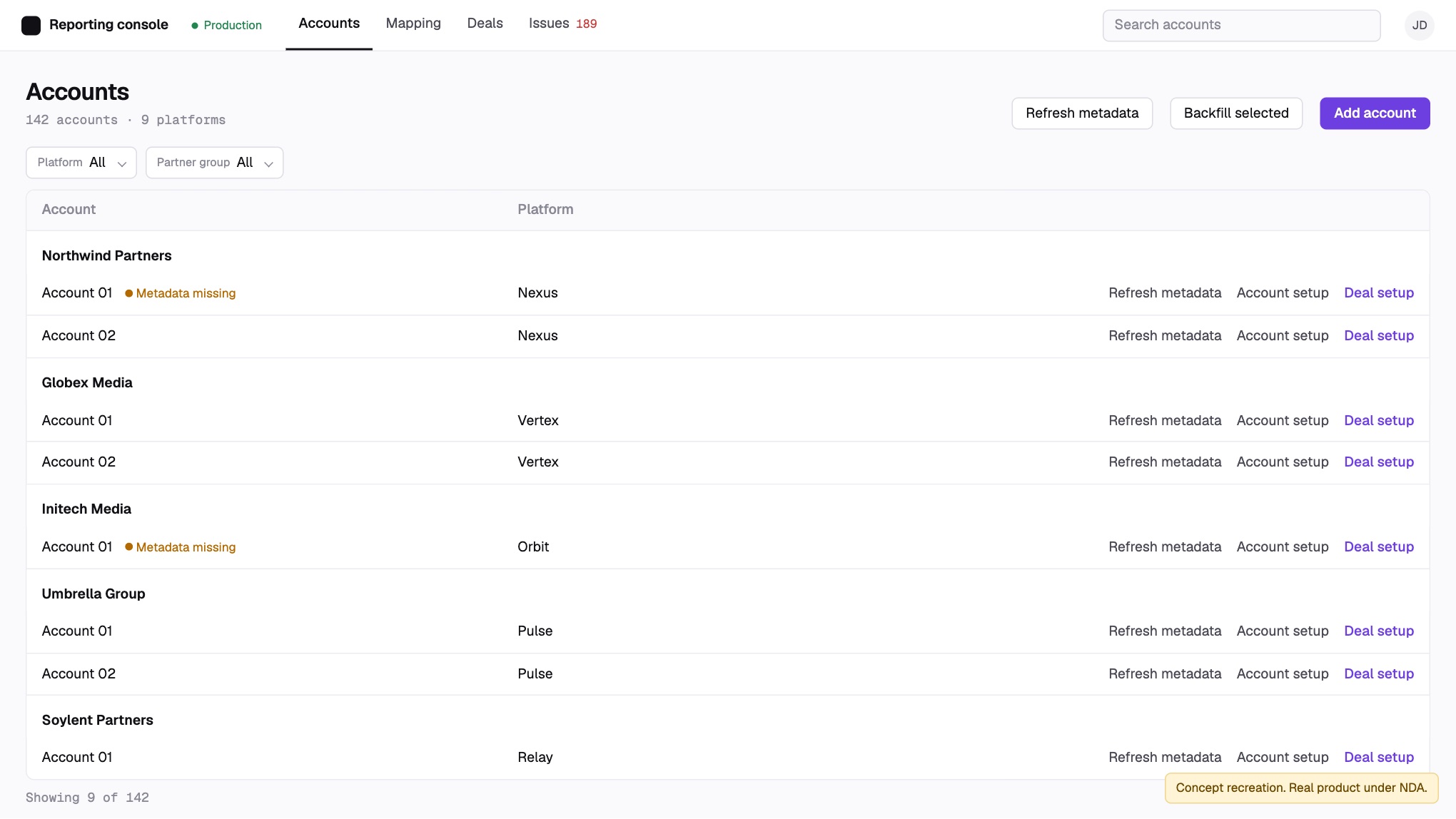
Internal reporting tools
Screens are concept recreations. The real product is under NDA.
StatusIn use, under NDAClientCanadian marketing-technology companyRoleSole designer; built the first versions in Figma Make
Tools that replaced manual reporting. The team no longer logs in to every source and copies the data into spreadsheets, which saves each person an estimated 10–20 hours a week. Happy to walk you through it in an interview.
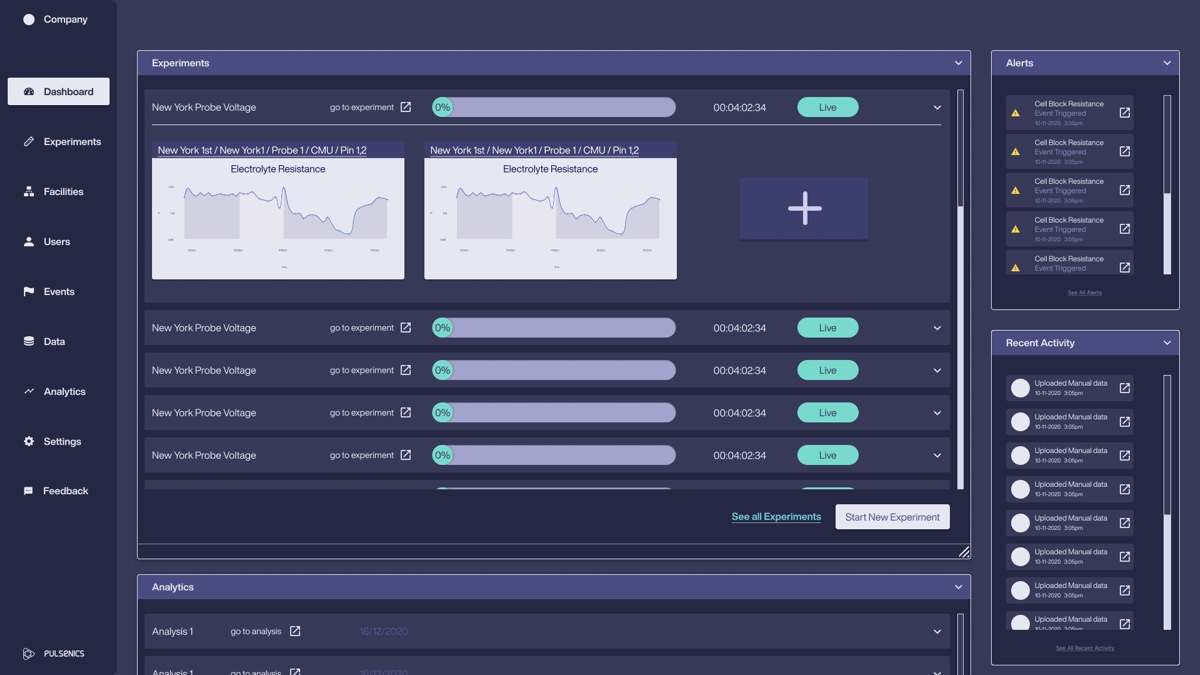
Pulsenics System Software
StatusIn useClientPulsenicsProductWeb app for EIS hardwareRoleProduct design and UI system, with Marc Varone
The app Pulsenics' clients use to manage their probes, run experiments and analyse the data. It's part of the company's core offering.

Pulsenics Website
StatusLiveClientPulsenicsProductCompany site and Knowledge CentreRoleDesign, build and upkeep; IA and homepage with Marc Varone
With Marc Varone, ran a workshop with the marketing team that led to an Applications page, where visitors work out which product they need. I built the Knowledge Centre for publishing what Pulsenics knows about EIS, within the site's original visual style.
I started in a data role at a Canadian marketing-technology company. I learned everything I could about data and database management, ended up owning part of the data funnel, and then used my UX skills to make that work easier. Today I lead a small reporting team and design the internal tools it and the company's other reporting teams use. My background is industrial design (OCAD University).
The thing I care about most in an interface: when you land on it, it should be clear what it's for and how to use it.
- FocusData-heavy B2B products and internal tools
- DesignFigma, Figma Make, design systems
- BuildReact, HTML/CSS, Webflow, Claude Code, Codex
- DataSQL and reporting
- HoursCape Town (UTC+2). Available until 10pm, so I overlap with US and Canada Eastern until about 3pm their time
Understand the problem
I talk to the people who'll use it, watch how they work now, and run workshops or card sorts with the team.
Sketch, test and refine
Rough sketches become rough mockups. When time and resources allow, I put them in front of users, then refine over several rounds until the interface is clear and works.
Design system, then build
I set up the design system and foundations in Figma. That makes the full interface faster to build, and it gives AI a system to work from. From there I use AI to build working interfaces for another round of testing, then the full app, and I keep refining.
Where AI fits
I run the research myself. It's conversations, workshops and watching people work, and I want to be part of all of it. AI helps me organise what I find and spot patterns I might have missed.
Once the structure and flows are solid, AI works from my Figma design system. I use it for the detail work that takes hours by hand: tuning corner radii, refining the colour palette, adjusting spacing. It's also how I explore. I can try variations or change the visual direction, and the whole interface follows without starting over.
- Gabion DevelopmentsA marketing site for a Toronto design-build firm. I designed and built it on my own in Webflow in two months, and it has been live since 2022.View
- Knowledge LeapMy OCAD University thesis: an open source AR app for Magic Leap that turns your surroundings into lessons.View
- DuoVillageA group research project: a Duolingo concept for practising real conversations without the social anxiety.View
Hiring for a product or UX role?
I'm open to roles on data-heavy B2B products and internal tools.