← Earlier work

University group project UX research Web & mobile Concept

DuoVillage

A concept redesign of Duolingo that gives learners real-world conversation practice, without the social anxiety that keeps them away from it.

DuoVillage on a laptop and two phones: an illustrated village street with a house and a restaurant

What DuoVillage does

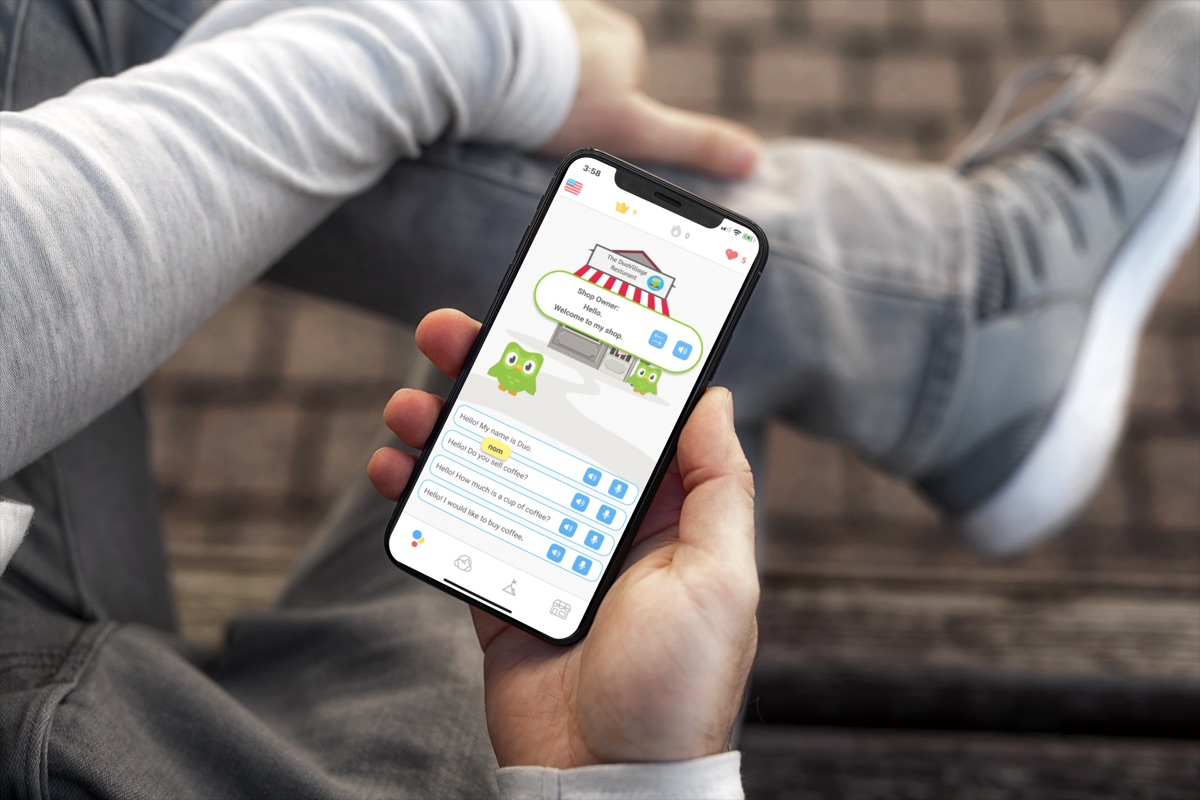
A hand holding a phone showing the DuoVillage map

Explore your village

Learn through real-world scenarios like shopping and meeting new people, in a village shaped around how you learn.

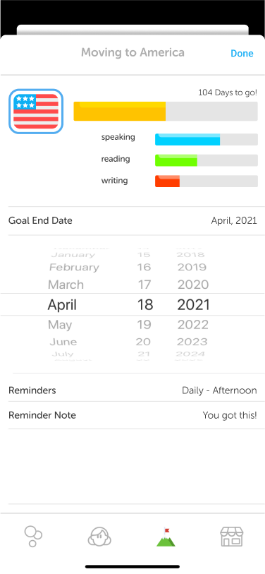
Someone on a couch setting a goal in the DuoVillage app

Set your plans

Set goals, or plan for a trip: where you're going, what you'll do there, and the level you want to reach before you leave.
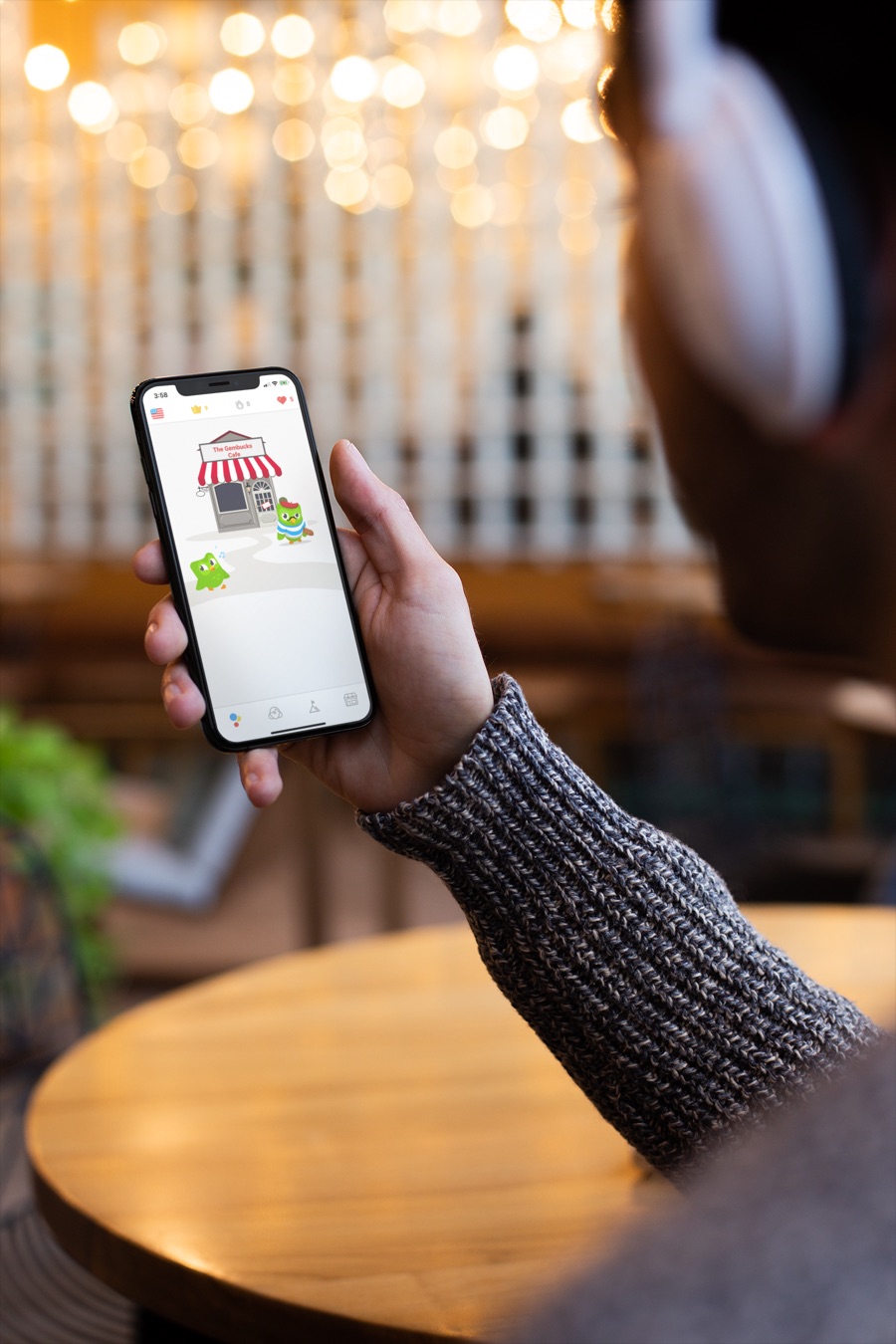
A phone in someone's hand showing a DuoVillage conversation

A world of languages

Every language gets its own village, rooted in its place and culture, with characters who remember you and always have something to say.

DuoVillage open on a desktop computer

On every screen

Pick up where you left off on any device. The village goes where you go.

Where it started

COVID-19 cancelled Duolingo's in-person events, the one place learners could practise speaking with real people.

Duolingo's mission is to make education free, fun and accessible to everyone. Many learners valued its in-person events because they gave them real-world practice that the app couldn't. When the pandemic shut those events down, my group and I set out to find what could replace them.

Duolingo notice: in-person events are temporarily suspended because of COVID-19
Duolingo's notice suspending in-person events

The research changed our idea

Our first idea

Move the events online

  • Video-call versions of the in-person events
  • A two-way pairing program where learners teach each other
What we found

Most learners would rather not

  • Learners on the Duolingo forums worried they couldn't follow a conversation, or would back out
  • Most people we surveyed and interviewed prefer to learn alone
63

Duolingo users, past and present, answered our survey

84%

prefer to study a new language alone rather than in a group

12%

were interested in voice or video chat; the rest preferred text
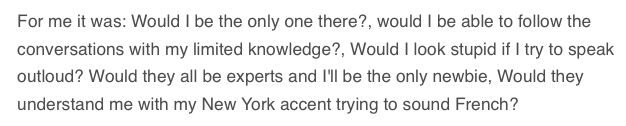
Duolingo forum post from a learner about the in-person events Duolingo forum post from a learner about the in-person events Duolingo forum post from a learner about the in-person events

"The amount of activation energy needed to overcome social anxiety was too high."

Luis von Ahn, co-founder of Duolingo, on why a pairing feature users asked for didn't work in testing

Duolingo had already A/B tested a pairing program and it failed, even though users had asked for it. Research it cited from the US military links the fear of looking stupid with a poorer ability to learn a language. Our first idea wasn't meeting a real user need or adding business value, so we went back to what users were actually missing.
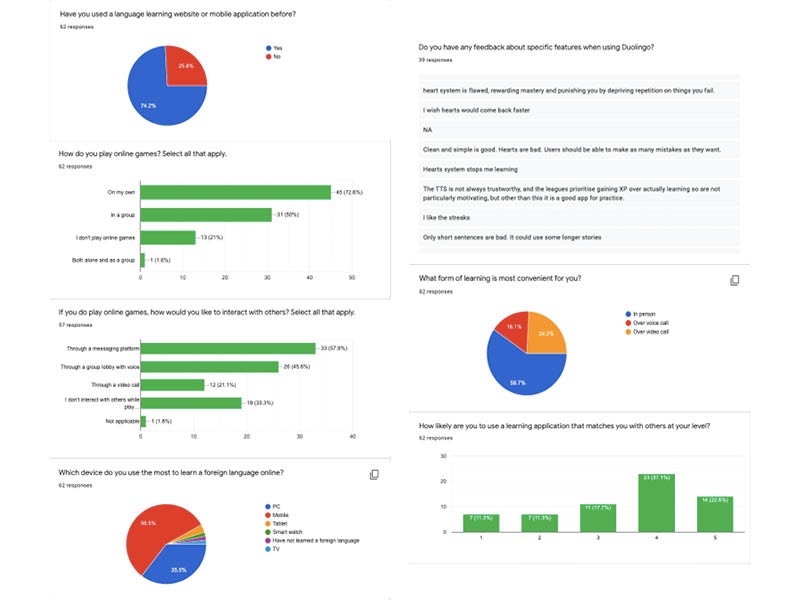
Survey result charts: language app use, gaming preferences, preferred ways to communicate and device use
Survey results
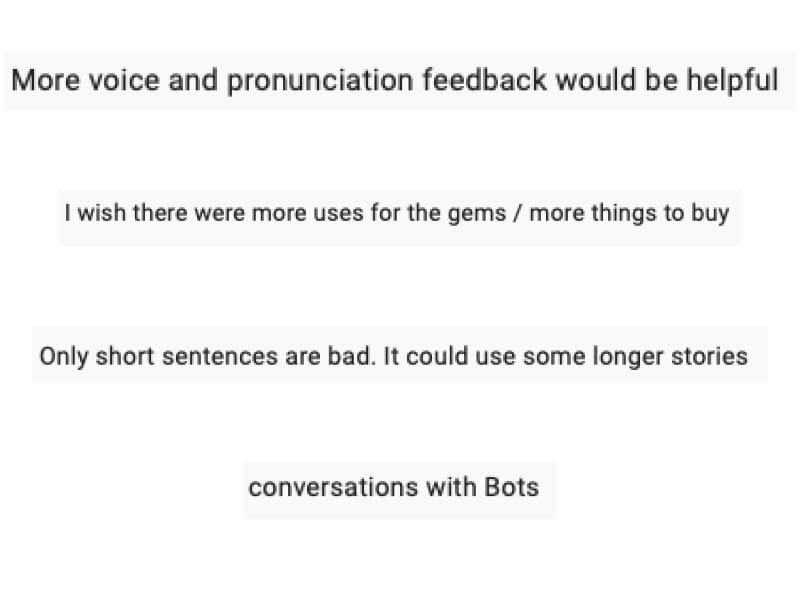
Open feedback from survey respondents about Duolingo
What learners told us about Duolingo

Two problems worth solving

1. Solo learners want real-world practice

Duolingo is built for solo learners but focuses on listening and writing. Exercises like "type what you hear" never ask you to say "I'd like to order a coffee" or "Where's the train station?", and there's no conversation partner to practise with.

2. Motivation fades

Goals are measured only in XP, which isn't personal: everyone learns for a different reason. And the avatar shop offered just three outfits, leaving Duolingo's game-like side underused.
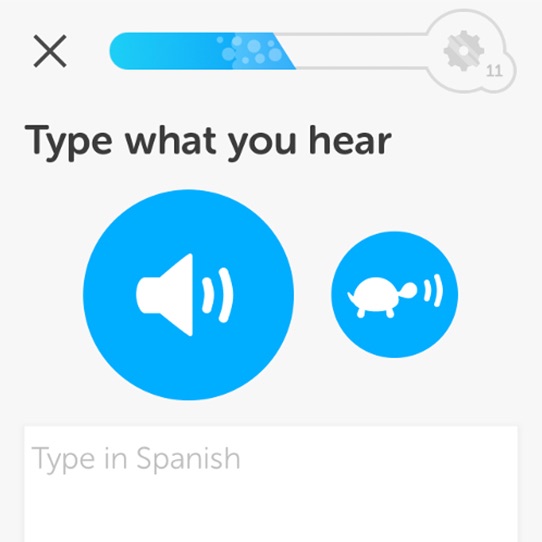

A Duolingo 'type what you hear' exercise
Practice leans on typing, not speaking
Duolingo's gem shop
Limited ways to personalise

Who we designed for

Portrait representing the persona Élise Couture

Élise Couture

A French graduate student in Paris, learning English because she's moving to the USA next year. She also wants to visit Japan.
  • Prefers to learn alone because she's shy
  • Uncomfortable speaking in front of others
  • Enjoys online games
  • Motivated by visible progress and rewards
  • Only uses free apps
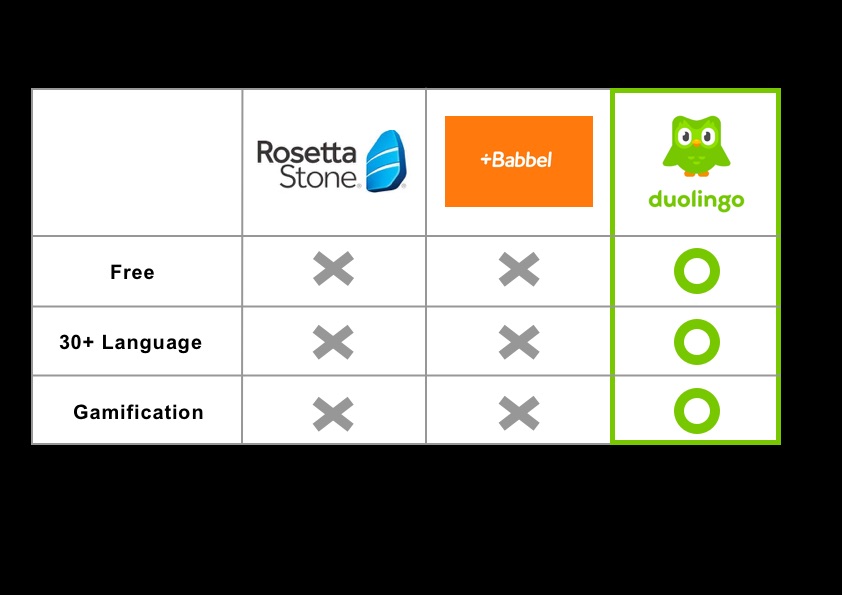
Comparison of Rosetta Stone, Babbel and Duolingo: only Duolingo is free, offers 30+ languages and uses gamification
Rosetta Stone and Babbel are paid subscriptions; Duolingo is free, which is why it reaches far more people, and learners like Élise
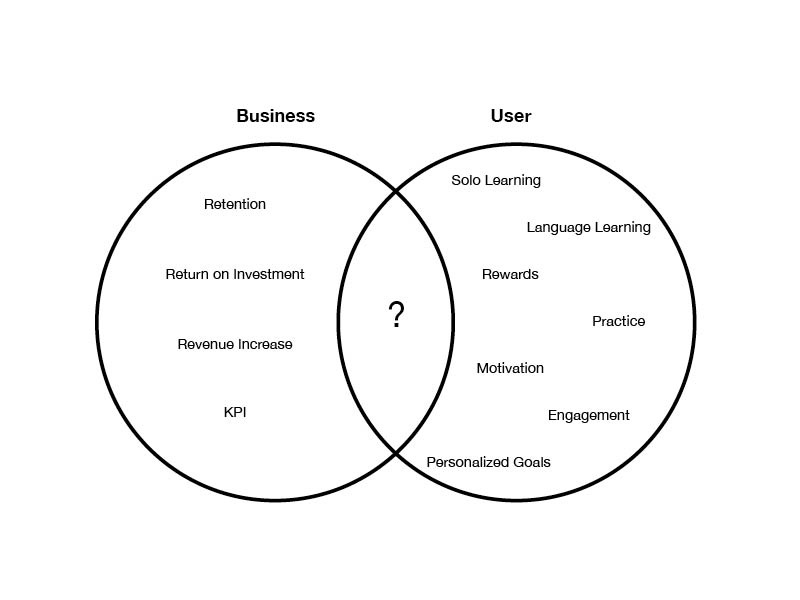
Venn diagram: business needs (retention, return on investment, revenue, KPIs) and user needs (solo learning, rewards, practice, motivation, personalised goals) with a question mark where they overlap
Finding the overlap between business and user needs

The user wants

Real-world practice that doesn't add social anxiety, and personal options that keep them motivated.

The business needs

Higher engagement and retention, and more revenue from stronger rewards and goal features.
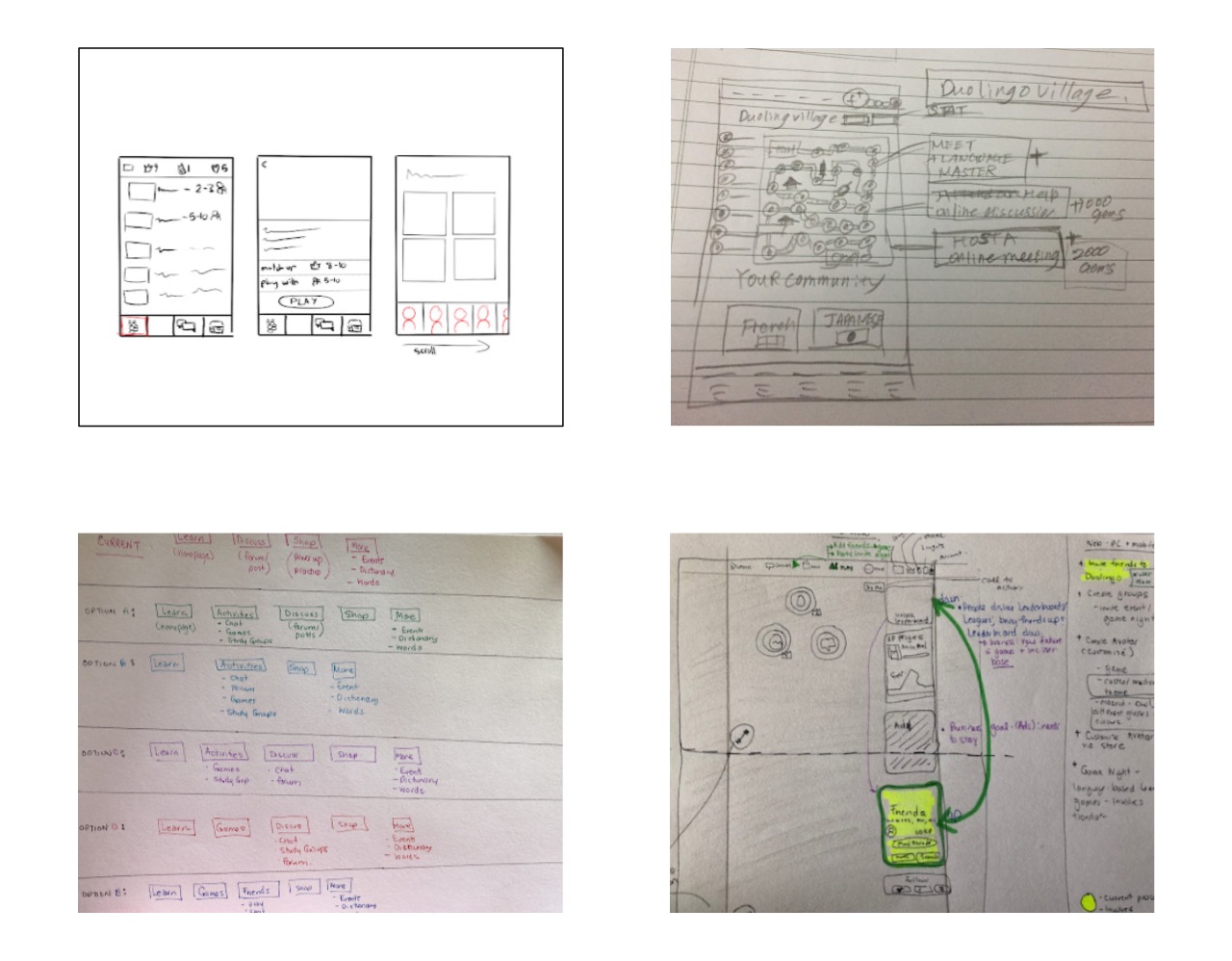
From sketches to a solution

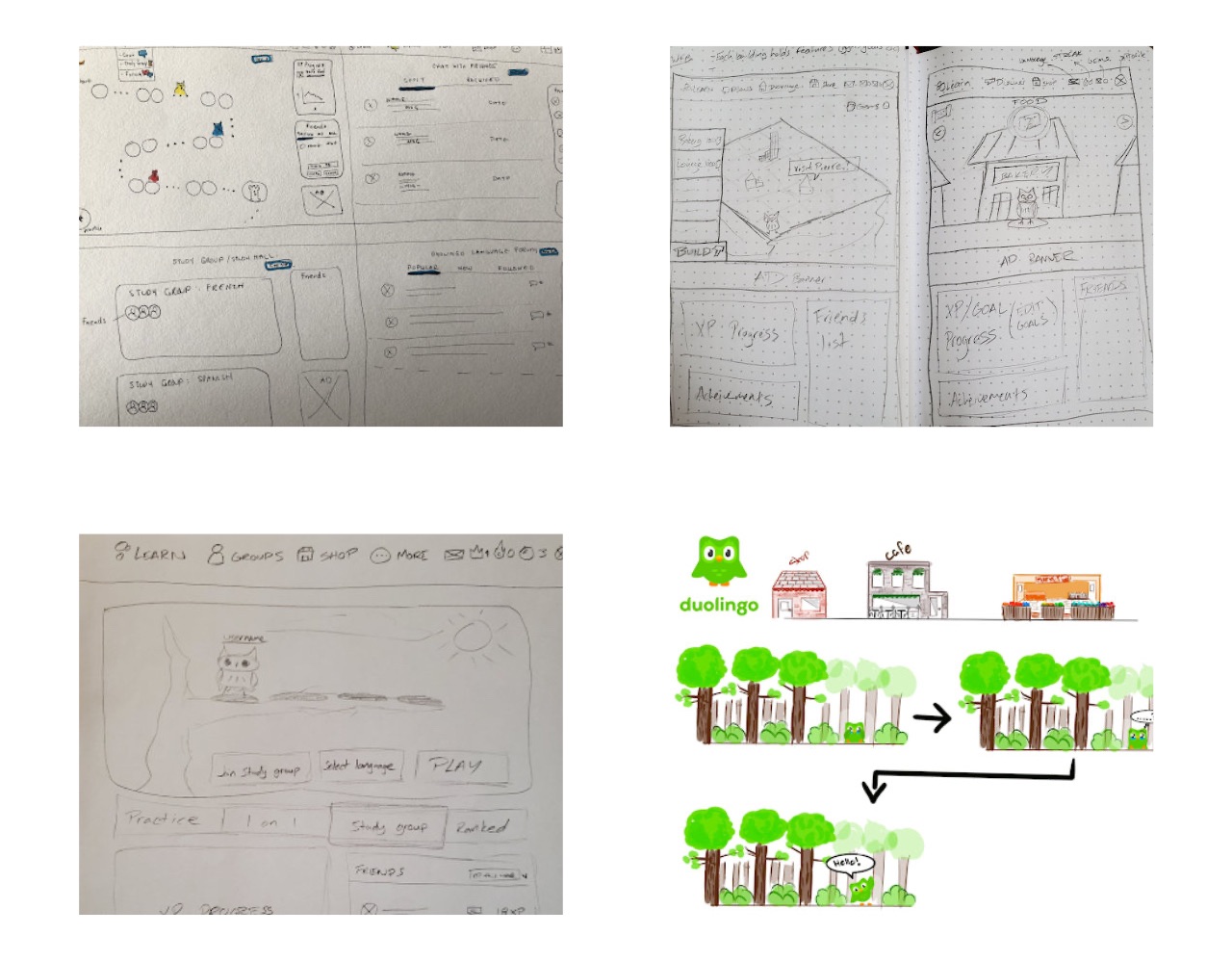
First round of sketches: lobbies, groups and adding friends
Round one. Built around groups: lobbies and ways to add friends. The research sent us back to the drawing board.
Second round of sketches: game ideas focused on solo learning
Round two. Solo learning and retention first: game ideas and new ways to present the web and mobile apps.

Our solution: a village to learn in, where you practise with characters powered by an AI chatbot instead of strangers.
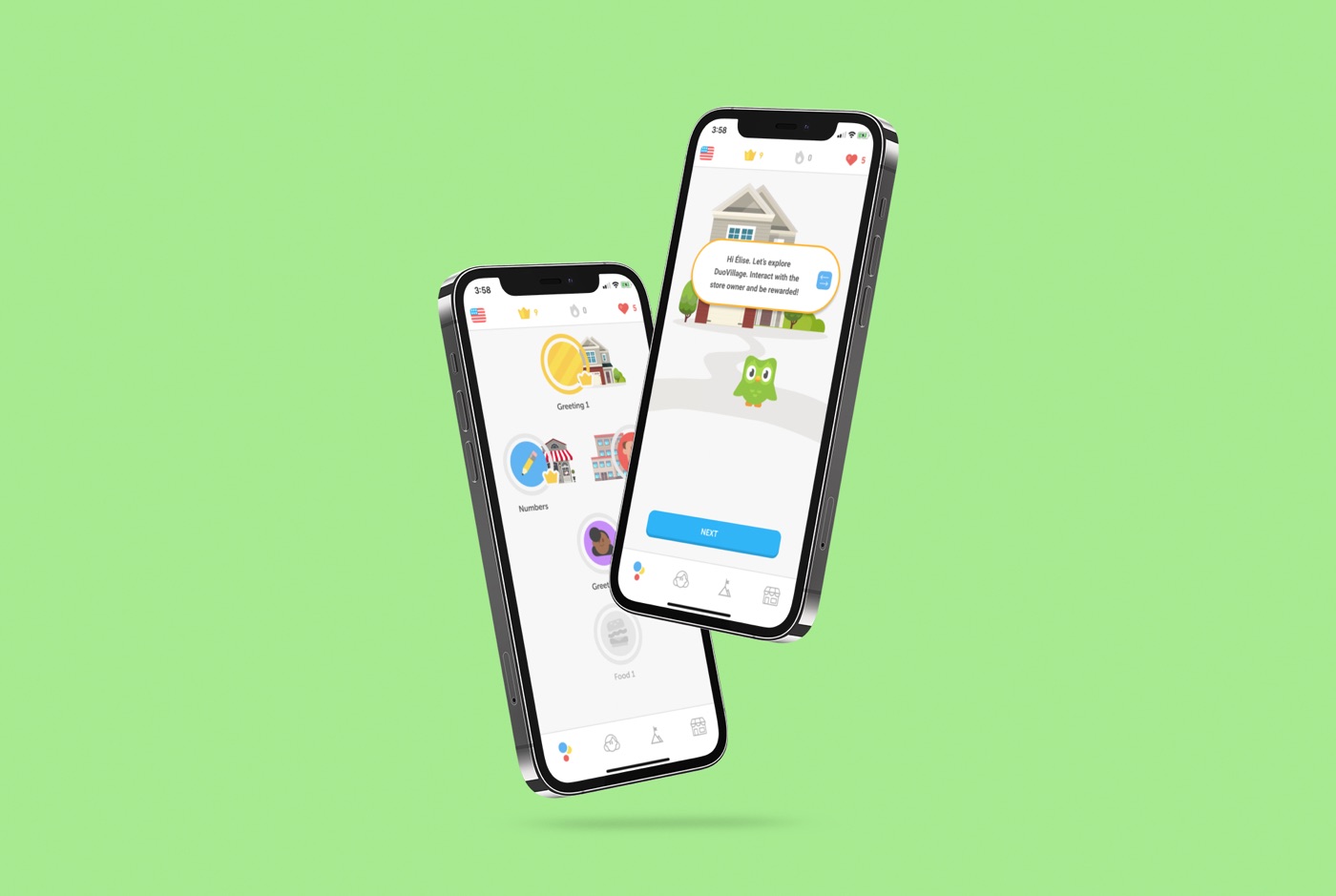
Two phones showing DuoVillage screens

The mobile app

Lessons

01 / 14

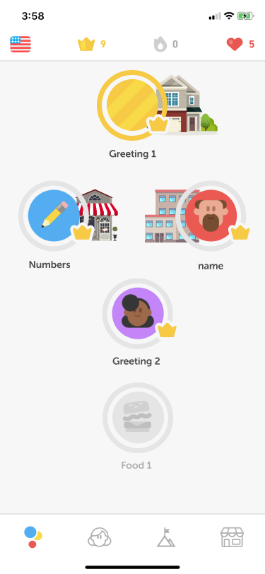
Lessons now live in a village

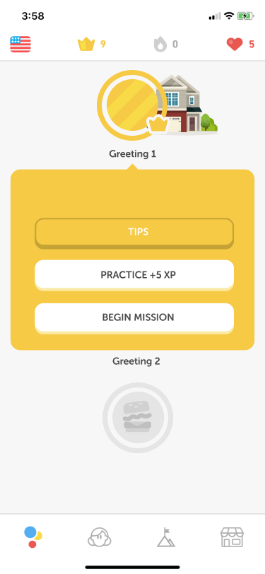
The old level bubbles are attached to places, like a café or a restaurant, so every lesson has a real-world context.

Lessons stay, missions are new

Tips and practice work as before. Begin Mission takes what you just learned into a real scenario, different every time.

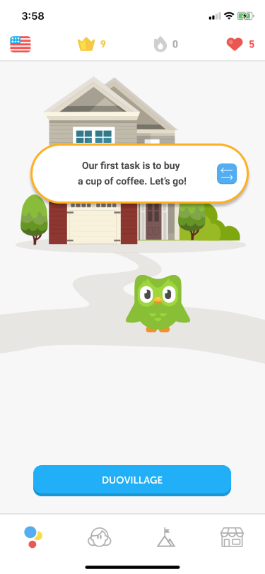
Every mission has a task

"Our first task is to buy a cup of coffee. Let's go!"

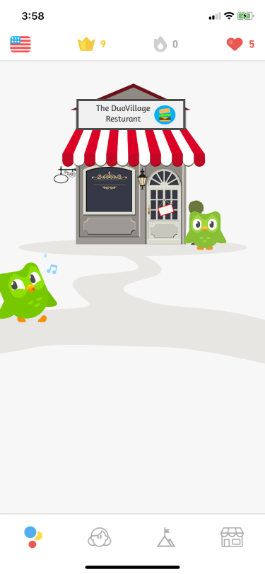
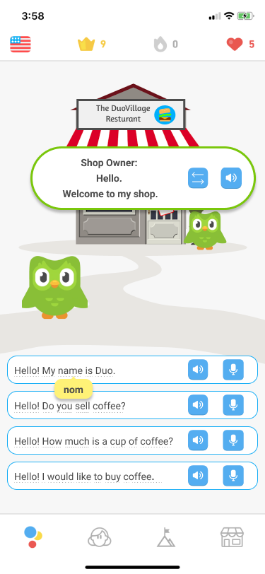
Walk into the shop

The village path leads to the restaurant, where a character is waiting.

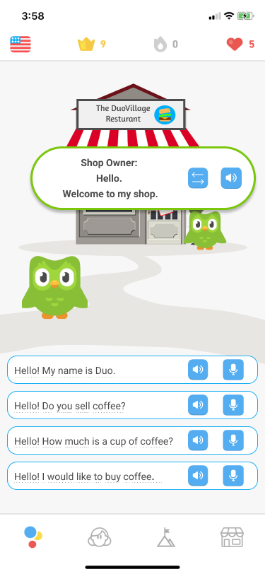
Meet a character

Characters are powered by a chatbot. Tap translate to see what they said in your language, or the speaker to hear it again.

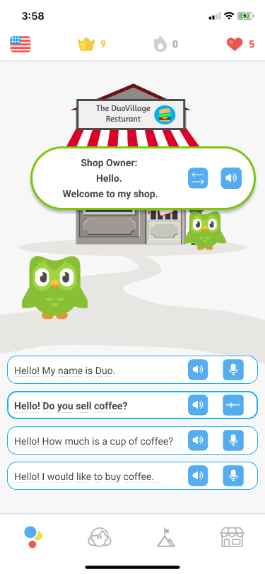
Choose what to say

Pick a reply from a set of answers, and tap any word to see what it means.

Say it out loud

Tap the microphone and speak your answer instead of tapping it, for extra XP.

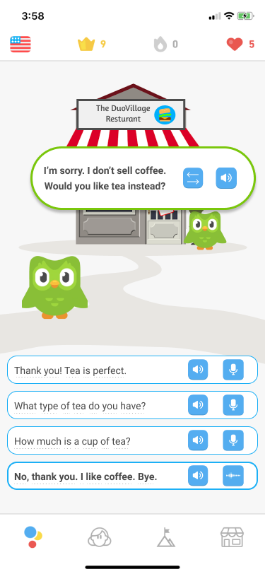
Expect the unexpected

"I'm sorry, I don't sell coffee. Would you like tea instead?" Conversations can go somewhere new, like real ones do.

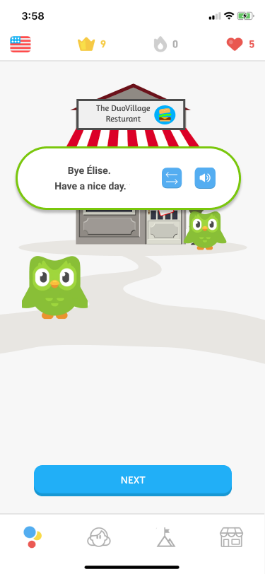
Characters remember you

"Bye Élise. Have a nice day." The shop owner knows your name.

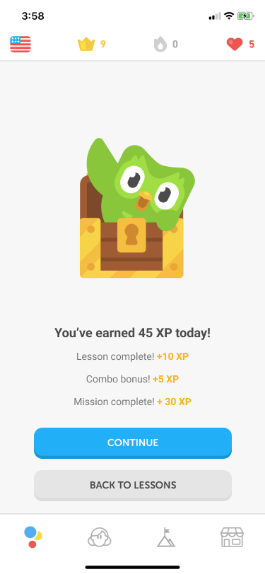
Mission complete

XP for the lesson, the combo and the mission. Carry on to the next mission or head back to your lessons.

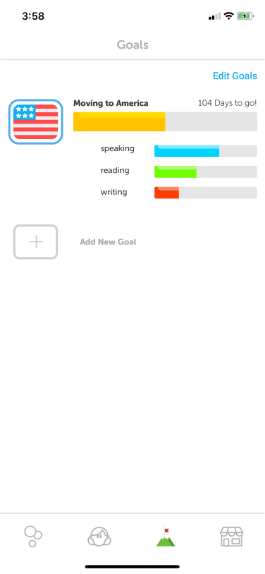
Goals replace the leaderboard

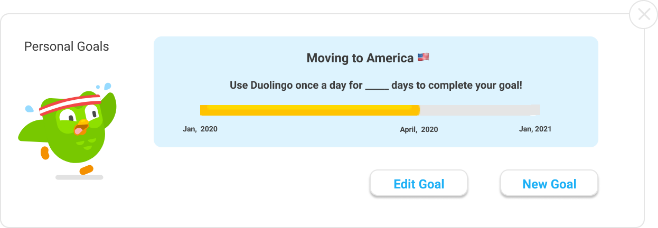
A new Goals tab shows each goal, the days left, and progress in speaking, reading and writing.

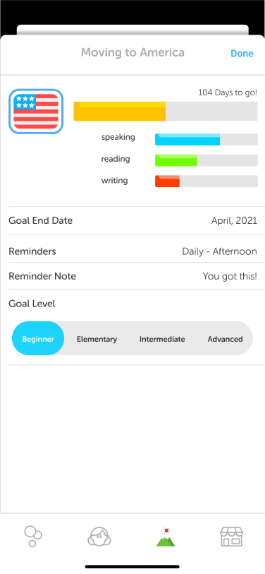
Every goal has a reason

"Moving to America" has a deadline, daily reminders and a note to keep you going.

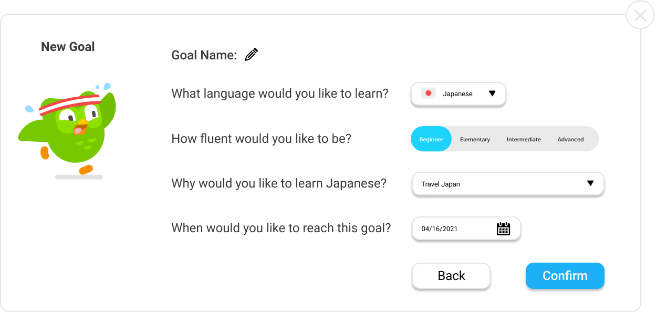
Pick your level

Choose the level you want to reach, from beginner to advanced.

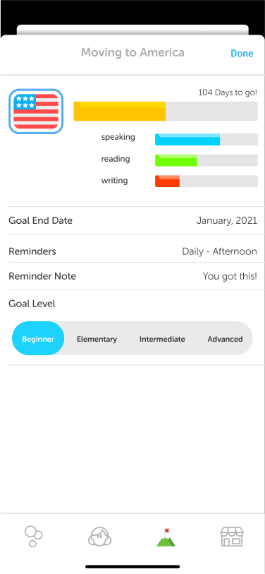
Set the date

Choose when you want to get there. Reminders and notifications follow your timeline.
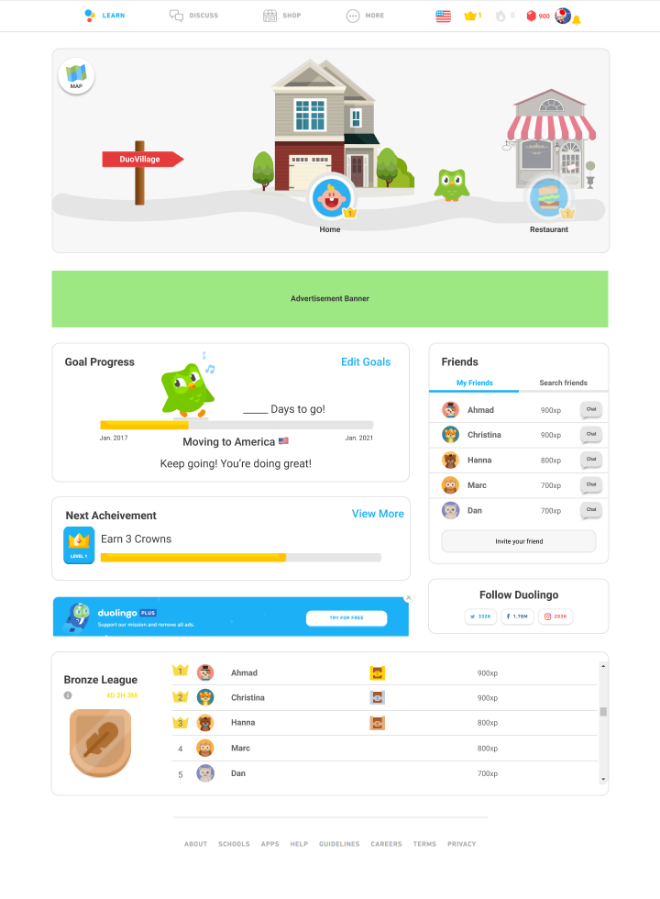
The web app

DuoVillage web home: the village map at the top, then goal progress, friends, next achievement and the league table
  1. The new home screen puts the village front and centre.
  2. Level bubbles are attached to places, so lessons have context.
  3. Goal progress sits right below: days to go and a timeline for "Moving to America".
  4. Finding friends is easier: search and send a request instead of following and waiting for a follow back, and see how far into the village friends have gone.
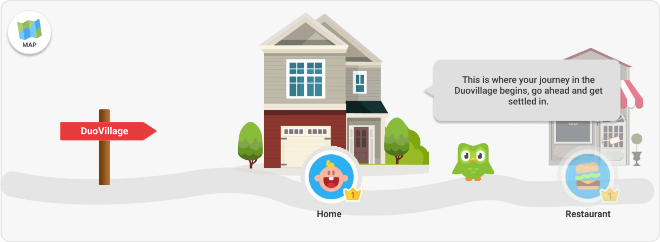
Village path starting at Home, with Duo explaining that this is where the journey begins
Your journey starts at home, and Duo explains where you are.
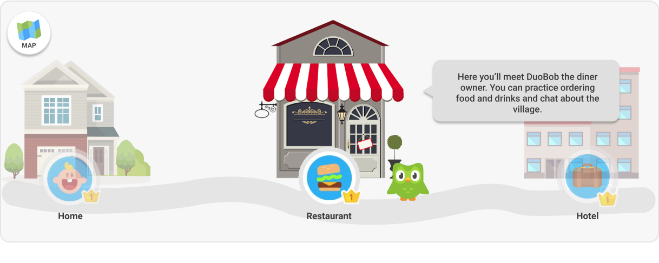
Village path showing the restaurant and who you'll meet there
Move between buildings to see who you'll meet and talk to.
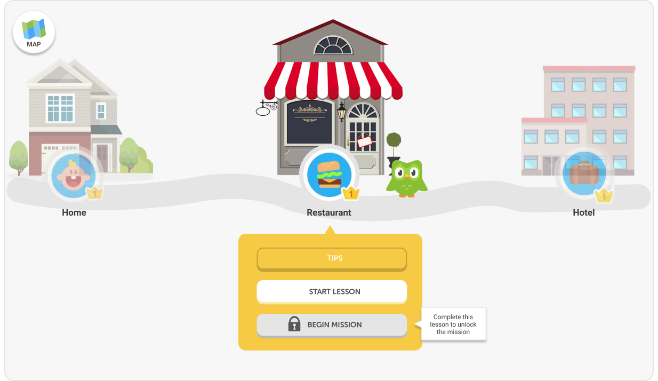
Lesson options with practice and a new mission
Lessons don't change, but now you can apply them in real scenarios, with something new each time.
Personal goals list
See all your goals and add new ones, so reminders are personal and on your timeline.
New goal form with language, skill level and reason
Set a new goal by language, level and reason. Going to Japan? Learn some Japanese before you land.
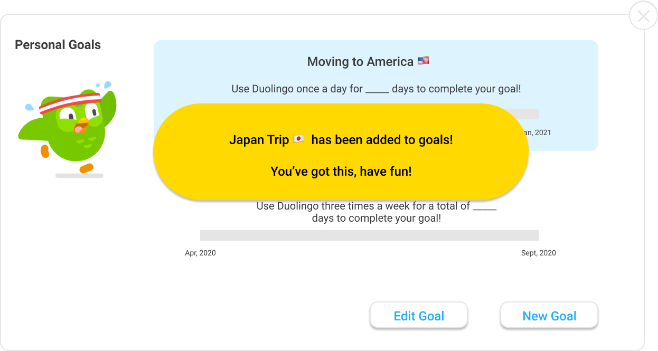
Confirmation: Japan Trip has been added to goals, you've got this
"Japan Trip has been added to goals! You've got this, have fun!"

About the project

  • ContextUniversity group project, taught online during COVID-19
  • TeamHanna Hasegawa, Rehan Rameez, Christina Lukasko and me
  • MethodsForum research, a 63-person survey, interviews, persona, competitive analysis, sketching
  • OutputWeb and mobile redesign concepts

DuoVillage is a student concept and is not affiliated with Duolingo. Duolingo, Duo and related marks belong to Duolingo, Inc. Lifestyle mockups use stock templates.